
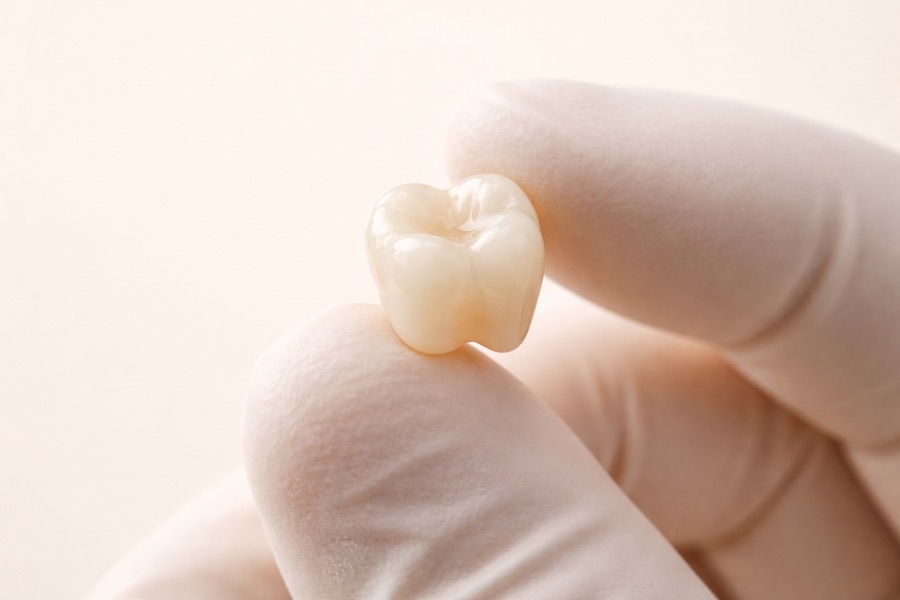
It is one of the harder conversations we have. A tooth is badly damaged, and the choice is
between saving it with a crown or removing it. Patients almost always want to save it — and
usually that is the right instinct. Sometimes it is not.
What the decision actually turns on
It is not really about the crown. A crown is straightforward. The question is whether there is
enough healthy tooth left underneath to carry one, and whether the foundation it sits on is sound.
We are looking at three things:
- How much solid tooth structure remains, particularly above the gum line
- The state of the root and the bone around it, which the x-ray shows and your mouth does not
- Whether there is an active infection, and whether it can be cleared
A tooth that looks alarming from the outside can be very restorable. A tooth that looks almost
untouched can have a root fracture that ends the conversation. This is why we will not give you a
firm answer over the phone.
When a crown is the better option
If there is a decent wall of healthy tooth left, the root is stable and any infection can be
treated, keeping the tooth is nearly always worth it. Your own tooth holds its neighbours in
position and keeps loading the bone, which is what stops the bone receding. Nothing we can fit
replicates that perfectly.
When extraction is the honest answer
Some teeth are past saving, and stretching that out helps nobody. A vertical root fracture, decay
running well below the gum line, or severe bone loss around the root all point the same way. In
those cases a crown is a temporary fix on an unstable foundation — it will fail, and the failure
usually costs more than the original problem.
The other factor is what comes next. Removing a tooth leaves a gap that needs planning for, so
extraction is a decision about the whole space, not just the tooth.
The honest version
If your tooth can be saved, we will tell you and we will show you the x-ray the opinion is based
on. If it cannot, we will tell you that too, rather than fitting a crown we expect to fail. And if
it is genuinely borderline, we will say that as well — with what we would do in your position, and
why.